
Range of Services
A. Seed: Site visit, walking & talking, introduction to species/ecosystem where you live and general tending concepts. Suggested native plantings & simple to-do list for your outdoor work. Includes write-up. $75-100
B. Sapling: Providing you with guidance and/or labor to take action/projects to tend the land/forest (examples: simple grant writing, installing deer exclosures, native plantings, tending wild foods, selecting trees sustainably for timber/ firewood/ tapping/ mushroom logs etc.) $45/hour basic labor, $60/hour grant writing
C. Tree: Mapping your land, writing ecological/forestry grants such as New York State DEC Regenerate NY, NRCS EQIP, and/or creating & implementing a 10-20 year plan (forest/land tending guide) $60/hour grant and plan writing; but note that there are programs that can pay for you to get a forest plan.
Forest/land plans can be developed to help you enroll in Family Forest Carbon Program, meet conservation easement requirements, 480A Forest Tax Law Program, and/or sustainable forest stewardship certification
Further Details
A. Seed/Site Visit & Consultation
- Visit land with you
- Talk about your questions, concerns, goals & ways you relate to the land
- Follow-up with impression of forest & ecosystem condition & possible approaches & resources
B. Sapling/Examples of Projects for your land
- Provide you with basic map of your land you can use with GPS on your phone
- Apply for Regenerate NY, Trees for Tribs, Propagate Ag, NRCS EQIP or other grants for your land
- Protect plants most threatened by excessive deer browse
- Prune/remove overabundant plants/shrubs/trees while improving growth of others (marking or doing work with you)
- Plantings to restore biodiversity (typically bareroot or seed)
- Sustainable timber/firewood use plan (marking trees and/or providing labor)
- Developing a food forest/ecosystem: identifying, weeding, protecting & propagating edible native plants, planting additional edible plants/trees/shrubs as needed
- Hunting program for your land
C. Tree/10-20 Year Plan Process
- Full discussion about forest & goals (range of goals from forest health improvement, to ecosystem restoration, to food and materials, to education, to cultural access, to sustainable timber harvest, etc.)
- Gather historical land information
- Create map library: cultural features, Indigenous land context, geology, topography, soils, water, wetlands, key species or communities, historical aerial photos, land cover and land uses, any other features of note
- Develop forest/ecosystem inventory plan & sampling design: overstory, understory plants, native and introduced species, density, carbon storage, timber quality and quantity, insects and diseases, wildlife habitat features, deer density, regeneration, wild foods, culturally important species etc.
- Conduct inventory
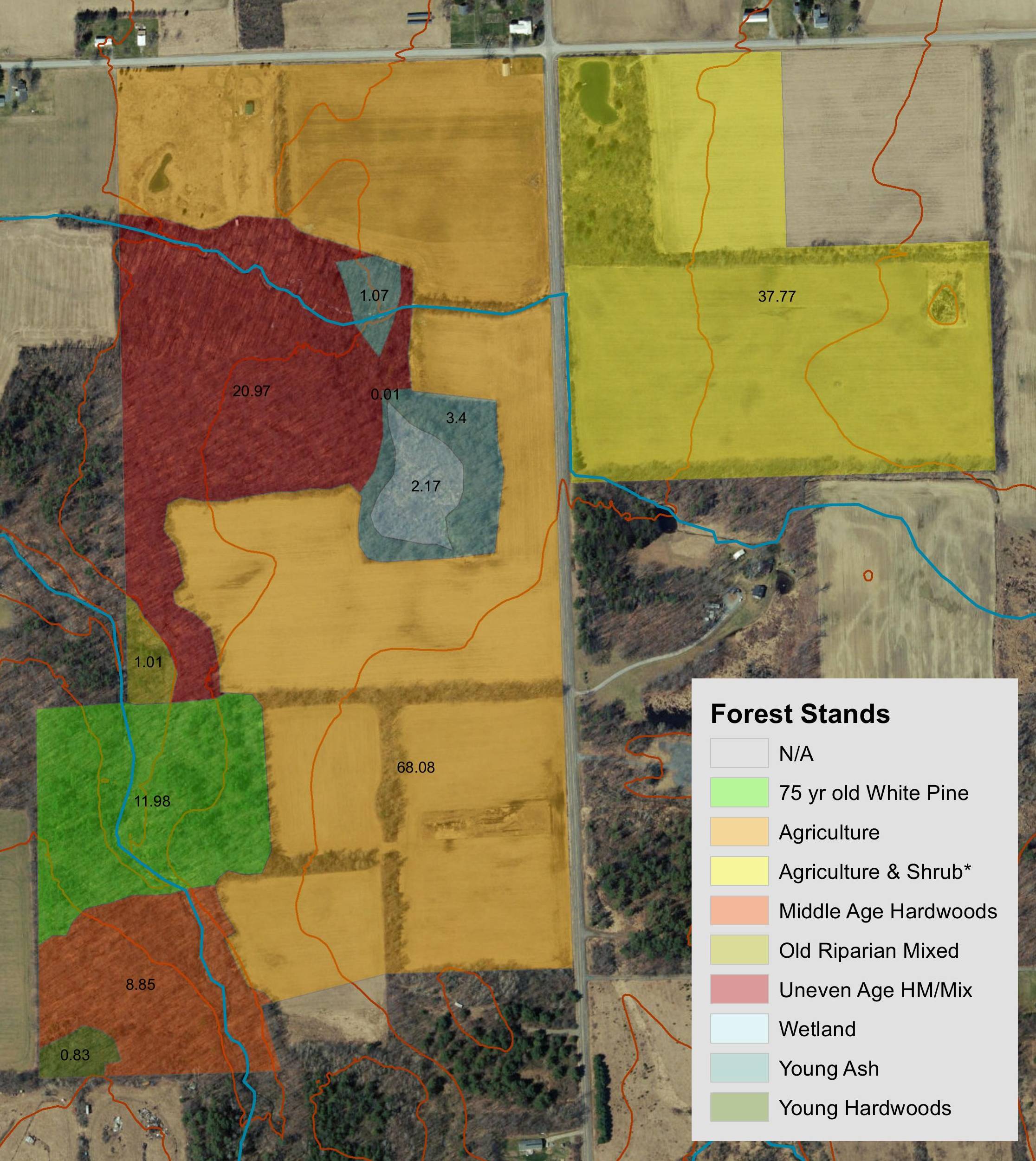
- Delineate forest stands
- Analyze data
- Provide multiple options for each forest stand. Potential actions include non-commercial thinning for forest health, careful selective timber harvest & log sale administration if forest can benefit from it, protecting regeneration of diverse species with deer exclosures or hunting plans, plantings, riparian buffers, vernal pools/microtopography, management of impacts from recently introduced species, forest gardening, conservation easements, cultural respect easements, community hunting, fishing, gathering or education programs
- Make projections depending what interventions are done or not
- With you, choose best course of action for each forest stand
- Confirm forest management plan with local and watershed codes, land conservancy and other standards, obtain permits
- Mark out boundaries, project areas, trees, conservation/protected areas, roads and trails
- Coordinate contractors/loggers, plants, seeds & materials needed
- Implement plan
- Monitoring & adapting plan as needed
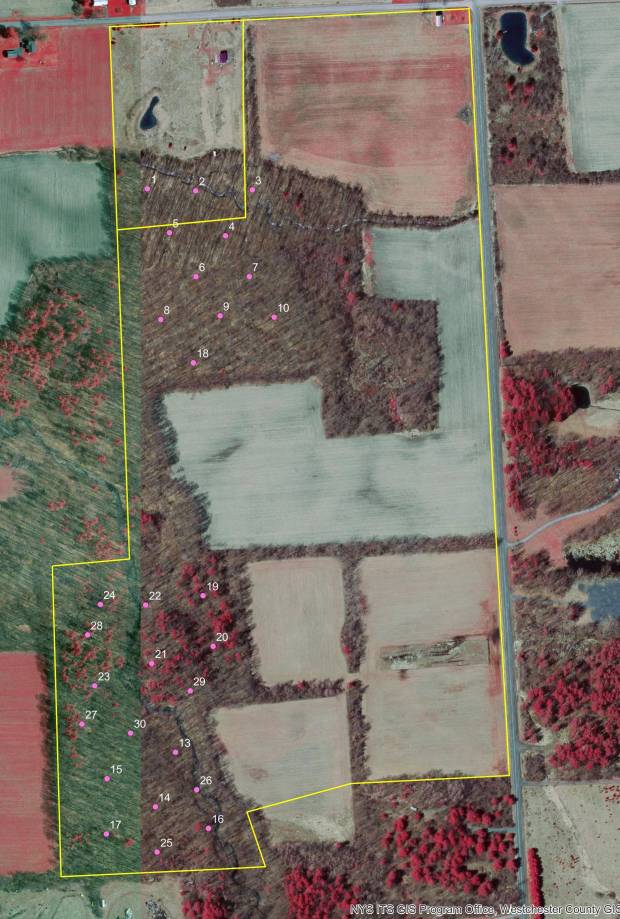
Left: Example of a forest inventory sample plot design
Costs
Grants and other funding may be obtained for projects to enhance the forest ecosystem and serve communities. If the forest can benefit from a stand improvement harvest, wood that is cut and sold may cover the forest plan, consultation, loggers’ costs and/or plantings and other stewardship. Alternative non-timber forest products and uses can also cover costs of tending the land.
Below: Example of a forest stand map
Set up a visit
Thank you for your response. ✨

 tend & gather